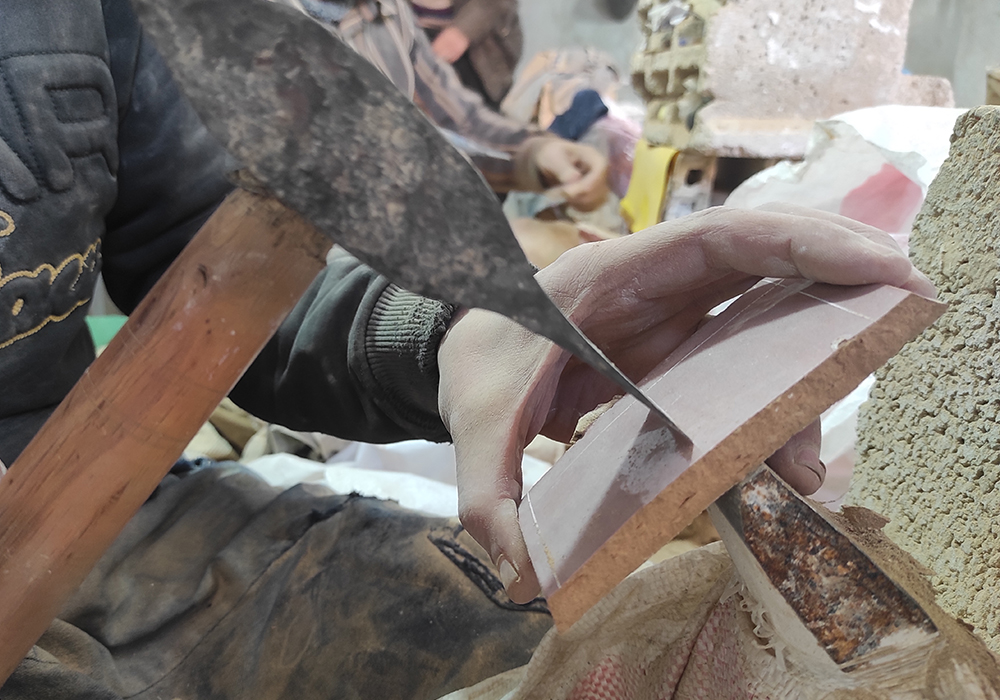
A quick answer: because Zellige exists as an art form, not an industrial product. The technique of cutting, glazing and firing each tile by hand in Fez is what defines Zellige — "handmade" is not a marketing label for a machine product, it is the definition of the material itself.
The Hand Process in Fez
- Clay: local terracotta clay from the Fez region is kneaded and shaped by hand.
- Cutting: the soft clay is cut to size with a wooden mold — never precision extruded.
- Glazing: the liquid glaze is poured on by an artisan. The thickness varies by fractions of a millimeter, which is exactly what creates the depth of color.
- Firing: tiles go into wood-fired kilns where temperature varies from tile to tile, producing subtle tonal shifts across the batch.
- Quality control by eye: each tile is inspected by hand; imperfect colors are reworked or discarded.
The Imperfections Are the Value
Machine tiles are valued for being identical. Zellige is valued for the opposite: every tile differs in tone, thickness and edge. The undulating surface catches light at different angles, giving walls a living, shimmering quality. When you order 5x5 cm, 10x10 cm or hexagonal Zellige, you are buying this variation.
Why Isn't Zellige Machine-Made?
Machines can produce a flat tile with a "zellige-like" glaze, but they cannot replicate hand-cut edges, the fine crazing of hand-applied glaze, or the natural tonal variation of a wood-fired kiln. "Handmade" is therefore not a production choice that could be changed — it is the essence of the craft. This is also why machine imitations are cheaper: they skip the craft.
Handmade Means Real Labor and a Fair Price
Each square meter of Zellige represents hours of artisan work. When prices seem suspiciously low, ask what you are actually buying. Read how much Moroccan Zellige costs and where to buy authentic Zellige to make an informed choice.
What Handmade Means for Your Project
- Order ≈10% extra material — variation and cutting need a reserve.
- Ask for physical samples — colors vary batch to batch.
- Respect the 30–60 day production lead time: handcrafted batches are made to order.
Plan your project with our buying guide, then request a quote.